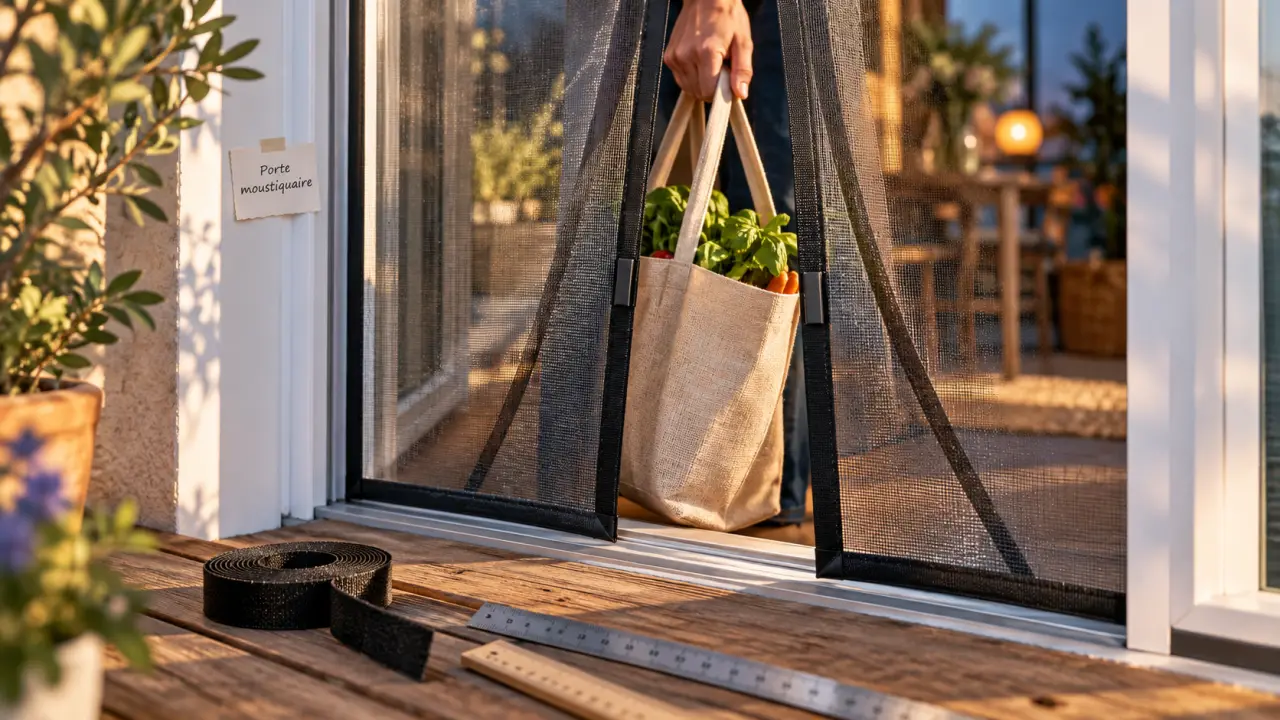
A magnetic screen door lets fresh air in without leaving the doorway open to flies, mosquitoes and other insects. The mesh parts as you walk through, then closes behind you. Before buying, focus less on the word “magnetic” and more on the opening, the frame and the way the screen will be used each day.
What a magnetic screen door actually does
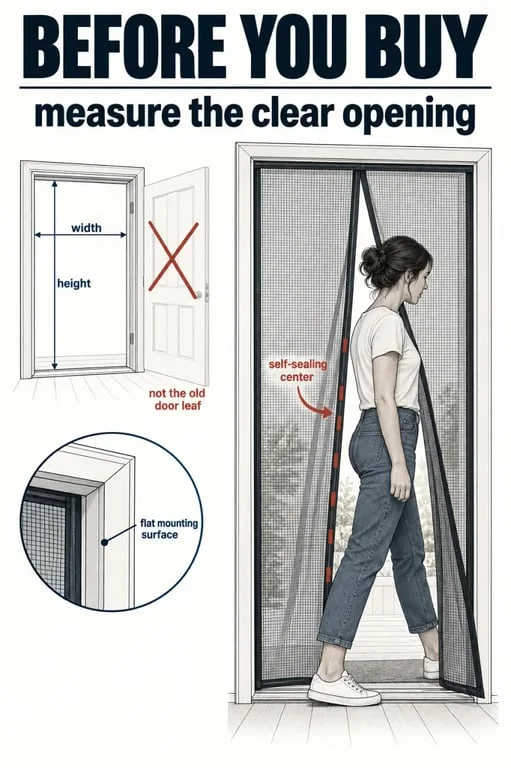
A magnetic screen door is a lightweight mesh panel, usually split down the middle, with magnets running along the vertical opening. When someone passes through, the two sides separate. Once released, the magnets pull them back together to create a self-sealing barrier. This design suits patio doors, back doors, French doors, caravan entrances and some sliding-door openings that stay open during warm weather.
It is not a replacement for a secure exterior door, and it will not make an opening weatherproof. Its purpose is more practical: improve ventilation while reducing the number of insects entering the home. Hands-free access is also useful when carrying shopping, holding a child’s hand or letting a dog into the garden.
Measure the opening, not the old door
The most common fit error
The sizing mistake behind many disappointing installations is measuring the door leaf instead of the space where the mesh will attach. Measure the clear width and height of the frame, then check whether the product dimensions describe the screen itself or the maximum opening it covers. A 90x210cm option may suit some standard doorways, but it is not automatically right for every 90cm-wide opening.
Take measurements at the top, centre and bottom of the opening. Older frames are not always perfectly square, so use the widest width and tallest height allowed by the manufacturer. You also need enough flat, clean frame surface for adhesive tape or hook-and-loop strips. The screen cannot seal properly if its edges attach to uneven trim, brickwork or a narrow strip of frame.
Why the frame’s joints matter
Inspect the joints where frame sections meet, especially on uPVC doors, glazed side panels and timber casings. A raised joint, drainage channel or projecting seal can leave a small gap behind the mesh. Although the gap may be hard to see, insects can use it to get through, and repeated movement can cause the adhesive to lift.
Run a straight edge around the mounting area before ordering. If the surface is broken or stepped, choose a screen with a wider perimeter fixing or consider a made-to-measure option. A closer fit at the edges often matters more than a product’s headline material specification.
Choose the build for your doorway traffic
Not every magnetic fly screen is designed for the same level of use. A bedroom door used occasionally may work well with basic polyester mesh and adhesive mounting. A busy kitchen exit, garden door or caravan entrance needs stronger stitching, reinforced edges and magnets that realign reliably after repeated daily passes.
| Feature to compare | Why it matters | What to look for |
|---|---|---|
| Mesh | Controls airflow, visibility and resistance to snags | Tightly woven, heavy-duty mesh with reinforced borders |
| Magnetic strip | Determines whether the centre closes cleanly | Magnets placed along the full height, not just at a few points |
| Perimeter fixing | Keeps the screen attached when people and pets pass through | Full-frame tape or hook-and-loop strips, with pins where suitable |
| Weight | Affects behaviour in a breeze | Enough structure to hang straight without making passage difficult |
Material specifications can help when comparing premium models. Some products list a 203 GSM mesh weight or 1000 Denier construction. These details point to a more substantial fabric, but they do not guarantee a good installation. Check the edge finishing and closure alignment as carefully as the material claim.
No-drill installation works only on a prepared surface
A no-drill magnetic screen door typically uses adhesive tape or Velcro-style mounting strips. This suits renters and anyone who wants to avoid holes in the frame, but “no drill” does not mean “no preparation.” Clean the mounting surface thoroughly, let it dry completely, then remove dust, polish and grease before applying the tape.
- Lay the screen flat and identify the top edge and centre opening.
- Attach the fastening evenly along the frame without stretching the mesh.
- Start at the top centre, then work outward so both halves hang at the same height.
- Test the magnetic closure several times before trimming the material or pressing every edge firmly into place.
If the magnets meet off-centre, do not assume they will settle with use. Reposition the panel while the adhesive can still be adjusted. A screen installed under tension is more likely to pull away at the corners and close poorly.
Buy with the right level of reassurance
For an occasional-use doorway, an off-the-shelf screen in the correct size is usually the sensible choice. If the opening is unusual, heavily used or exposed to wind, a custom measurement option can prevent the false economy of buying twice. A 95x215cm screen, for example, should be treated as a precise product dimension, not a rough guide.
Before placing an order, compare more than price. Read reviews for comments about adhesive durability, pet use and whether the magnets reconnect after someone walks through. One marketplace listing shows 9.5K reviews, a 4.5 out of 5 stars rating and 3K+ purchases in the past month. Those figures provide useful reassurance, but recent written reviews usually say more about fit and long-term use than a score alone.
Also confirm delivery timing, included fittings and the return terms before opening the package. A retailer offering a 30-day return window gives you time to check the fit, provided the screen remains in returnable condition. Measure first, inspect the frame second and treat the product page dimensions as non-negotiable.
{“@type”:”Article”,”@context”:”https://schema.org”,”headline”:”A Magnetic Screen Door Keeps Insects Out, but Only If You Measure the Opening Correctly”,”inLanguage”:”en-US”,”description”:”A magnetic screen door lets fresh air in without leaving the doorway open to flies, mosquitoes and other insects. The mesh parts as you walk through, then closes behind you….”}
Check the project conditions before choosing
Window and insulation advice depends heavily on the existing frame, local climate, orientation, moisture problems and how the room is used. Before buying materials, measure carefully, inspect for rot or air leaks, and compare the cost of a small repair with the cost of a full replacement. A cheaper fix can be smart, but only if it solves the real source of heat loss or discomfort.
For structural changes, large glass units, exterior work or anything affecting drainage and flashing, get a professional opinion before cutting or sealing. The best result usually comes from matching the product to the wall assembly, not from choosing the most expensive window accessory.
Related guides to continue
To build a stronger understanding of this topic, continue with these related guides from the same site. They cover nearby decisions, maintenance points and practical details that often influence the final result.