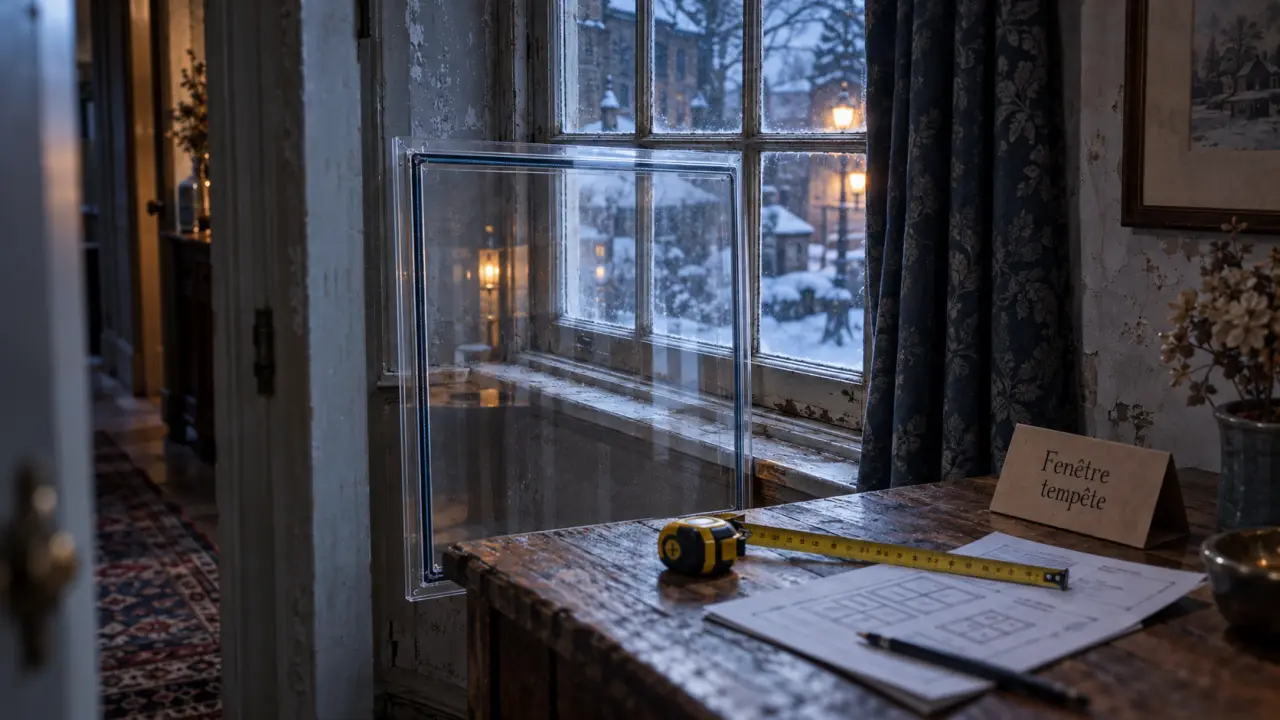
Inside storm windows offer a practical way to improve comfort when original windows are drafty, cold to sit beside, or difficult to replace. Installed on the room side of the existing sash, these removable inserts can reduce drafts, limit condensation, and soften outdoor noise without changing the building’s exterior. In an older home, apartment, or historic property, this preservation-first approach may make more sense than replacing the entire window.
What an interior storm window actually changes
An interior storm window is a secondary panel fitted inside the existing window opening. Depending on the product, it may use acrylic, Plexiglas, glass, a pressure gasket, or a magnetic mounting system. The original window stays in place. The insert adds a second, sealed layer on the indoor side.
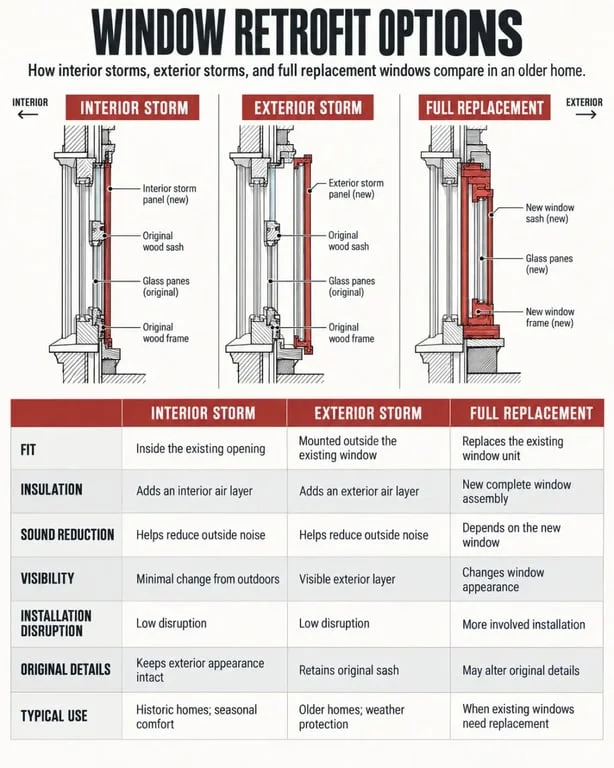
Its main job is to trap a stable pocket of air between the primary window and the insert. This dead-air space slows heat transfer, while the perimeter seal limits the cold drafts that often pass through old sash joints, worn weatherstripping, and uneven frames. The first noticeable change is usually a more even temperature near the window, not a dramatic transformation of the entire house.
Why the seal matters more than the panel alone
A clear panel with loose edges cannot perform like a properly fitted insert. Air leakage is often the weak point: it brings cold air indoors, allows warm indoor air to reach cold glass, and gives sound a path through the opening. A pressure-fit or magnetic system therefore needs to match the window closely, especially in older homes where the jamb may be out of square.
Choose the right route: standard kit, custom insert, or replacement
The best option depends on the condition of the existing window, not on appearance alone. A standard DIY panel may work well in a square, accessible opening with straightforward dimensions. A custom interior insert is more suitable when the frame is bowed, decorative trim limits the mounting area, or the property’s original character needs to be preserved.
| Option | Best suited to | Main advantage | Watch for |
|---|---|---|---|
| Standard DIY interior panel | Regular, measurable openings | Lower upfront cost and simple seasonal use | Gaps if the opening is not truly square |
| Custom-fit interior insert | Older, crooked, or historic windows | Closer seal and discreet finish | Accurate measurement is essential |
| Exterior storm window | Windows needing outside weather protection | Protects the exterior face of the primary window | More visible and exposed to weather |
| Full replacement window | Failed frames, rot, or severe operating problems | Addresses the entire window assembly | Higher cost and possible loss of original detail |
Replacement is the right option to discuss when there is structural decay, persistent water intrusion, or a window that cannot be secured or operated safely. If the sash and frame remain serviceable, an interior insert provides a lower-disruption retrofit. It can improve performance while keeping the existing joinery.
Comfort, condensation, and noise: what to expect
Less radiant chill and fewer drafts
Old single-pane glass can make a room feel uncomfortable even when the thermostat shows a reasonable temperature. Your body loses heat to that cold surface, particularly when you sit at a desk, dining table, or bed close to the window. By adding an insulating air gap and reducing leakage, inside storm windows can make that area feel noticeably less harsh during the heating season.
The improvement can also change how the room is used. When the cold perimeter becomes more comfortable, furniture does not need to be pushed as far from the glass, and curtains may not need to remain closed all day as a protective layer. More daylight and a more practical layout can matter every day, even when those benefits do not appear on an energy bill.
Condensation is a clue, not just a nuisance
Interior condensation forms when humid indoor air reaches a cold surface. A well-sealed insert reduces that contact by keeping room air away from the primary glass. If moisture still appears, check the fit before assuming the insert has failed. Gaps, high indoor humidity, poor air circulation, cooking, and drying laundry indoors can all contribute.
Water collecting inside the air space rather than on the room-facing panel points more specifically to a sealing problem. Correcting the gap or improving the perimeter seal should come before replacing the panel.
Noise reduction has limits
An airtight secondary layer can reduce sound entering through gaps and add another barrier to the window assembly. It tends to help most with steady traffic noise and general street sound. Very low-frequency vibration, noise traveling through walls, and sound entering through vents will remain.
For a noisy bedroom or office, prioritize a tight perimeter seal. Laminated glass may also be worth considering when it is available for the product you are comparing. The result still depends on the primary window and the other paths through which sound enters the room.
Measure before ordering, then plan for removal and cleaning
Measure the surface where the insert will actually sit, not only the visible glass. Take the width and height at several points because an old opening can taper enough to make an off-the-shelf panel unsuitable. Note handles, shutters, blinds, alarm contacts, and deep interior trim before ordering.
A custom supplier may provide a measurement kit, written instructions, video guidance, or direct assistance. Use those resources rather than estimating. A few minutes spent checking the opening can prevent a poor fit and the drafts that follow.
- Decide whether the panel will mount to the jamb, trim, or another flat interior surface.
- Confirm that locks, shades, and required emergency egress remain accessible.
- Choose a removable system if you regularly open the window or need seasonal ventilation.
- Ask how the panel should be cleaned and whether replacement gaskets, magnets, or other hardware are available.
Where inside storm windows make the most sense
Interior storm windows are especially useful in historic homes, where replacing original sash may alter the façade or conflict with preservation requirements. They also suit apartments and condominiums where exterior changes are restricted. Offices, churches, and other commercial spaces can benefit when the building needs better window performance with minimal disruption.
Before buying, inspect the primary window. Repair loose glazing, address water leaks, and confirm that the frame is sound. Then compare products by fit, mounting method, clarity, material, removal process, and support, not just by panel price.
The right insert should seal reliably, match the way the room is used, and remain easy to remove when ventilation or cleaning requires access. When the original sash is still in reasonable condition, that balance can improve comfort while allowing the existing window to remain part of the building rather than something to conceal or discard.
{“@type”:”Article”,”@context”:”https://schema.org”,”headline”:”Inside Storm Windows Improve Comfort Without Replacing Original Sash”,”inLanguage”:”en-US”,”description”:”Inside storm windows offer a practical way to improve comfort when original windows are drafty, cold to sit beside, or difficult to replace. Installed on the room side of the…”}
Related guides to continue
To build a stronger understanding of this topic, continue with these related guides from the same site. They cover nearby decisions, maintenance points and practical details that often influence the final result.