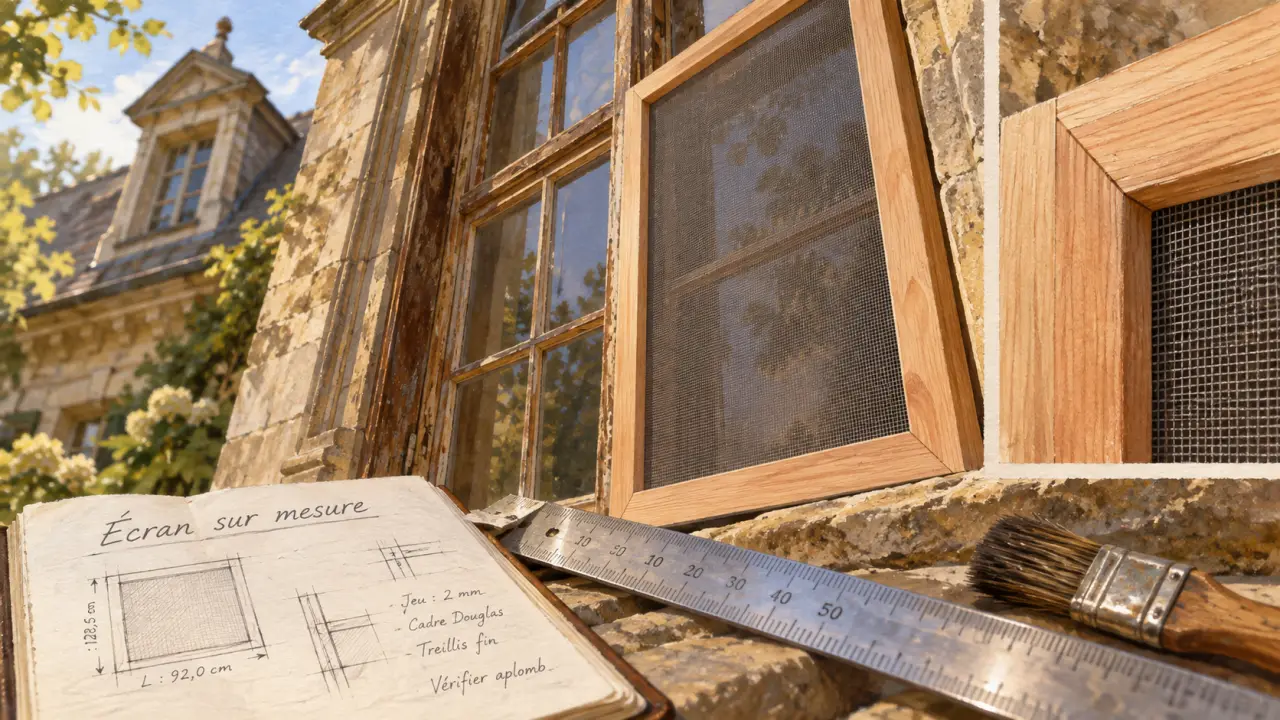
For a wood window, the right screen should blend into the architecture rather than look like an afterthought. A well-fitted wood-framed screen keeps insects out and fresh air moving while respecting the proportions, color, and joinery of an older home. The first decision is the screen format, followed by accurate measurements.
Choose the screen style that suits the window’s job
Wood frame window screens are not interchangeable. Some are simple removable panels, while others retract when the window is closed. A storm window serves a different purpose. Start with how you use the room, then consider the appearance you want.
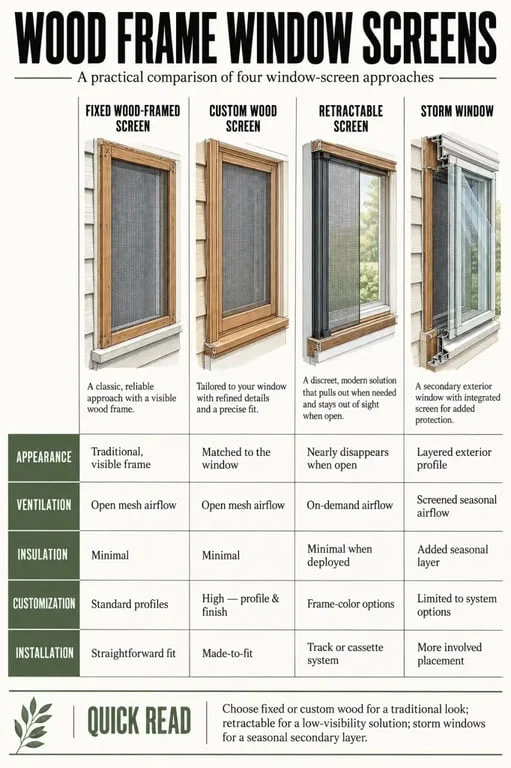
| Option | Best for | Main trade-off |
|---|---|---|
| Fixed wood-framed screen | Traditional double-hung, casement, Craftsman, Colonial, and cottage windows | Must be removed for cleaning, repairs, or seasonal storage |
| Custom wood screen | Non-standard openings, decorative windows, and sloped sills | Usually costs more than a ready-made screen |
| Retractable screen | Windows where an unobstructed view matters when the screen is not needed | Requires compatible mounting space and includes more moving parts |
| Storm window | Cold-season protection and added winter insulation | It is not a substitute for an insect screen in warm weather |
A fixed wood screen is often the most convincing choice for a period home because its rails can echo the existing sash. Retractable models suit windows where a visible frame would interrupt an important view. Some use real wood veneer and are available in finishes that blend with existing woodwork. On a historic façade, check that the housing and side tracks remain discreet.
Measure the opening before selecting a standard or custom size
Ready-to-install screens can work when the opening is genuinely standard, but older wood windows rarely reward assumptions. Sashes can be slightly out of square, paint buildup can reduce the opening, and sill profiles may vary from one room to another. A custom-made screen is usually the safer choice when the fit must be precise.
Record more than width and height
Measure the screen opening where the frame will actually sit: take the width at the top, middle, and bottom, then measure the height on both sides and through the center. Use the smallest measurement for ordering unless the manufacturer gives different instructions. Also record whether the screen mounts inside the opening, against a stop, or on the exterior face of the window.
- Opening width and height at several points
- Depth available for the frame and retaining hardware
- Location of stops, clips, pins, or turn buttons
- Whether the sill is flat, rounded, or sloped
- Details of any existing screen, including frame thickness and rail layout
A sloped sill needs particular attention. A flat-bottom screen may rock, leave a gap, or sit under stress. Some custom frames can be ordered with a 10-degree beveled bottom so the lower rail meets the sill cleanly. When requesting a quote, send a side photograph with a straightedge in place. It can clarify the sill profile better than measurements alone.
Match wood, mesh, and details to the existing joinery
The standard 3/4-inch unfinished Douglas fir frame is a practical starting point, especially when the screen will be painted. Still, frame thickness, rail size, wood type, and finish should follow the window rather than a catalog default. A narrow Victorian sash can look overwhelmed by a heavy screen rail, while a Bungalow window may suit a more substantial frame.
Finish the frame as part of the window, not as a separate accessory
Unfinished wood allows staining or painting to match the surrounding trim. Test the intended stain on an offcut first, since new wood and aged sash wood can absorb color differently. For painted exteriors, seal every face and edge before installation, including the lower rail where water can linger. Moisture is usually the long-term enemy of a wood screen frame.
Look for visual continuity between the screen and the window. Repeating the sash’s rail height, paint sheen, or warm undertone helps the assembly feel coherent. A mismatched charcoal-black aluminum edge can draw attention away from carefully preserved woodwork. Crossbars, grid sections, taller bottom rails, and decorative corner brackets make sense when they repeat a feature already present in the window or porch.
For mesh, charcoal fiberglass is a common, unobtrusive option. Standard mesh suits ordinary insect control. Bug-resistant mesh is worth considering where smaller insects are a recurring issue, while better-visibility mesh can suit rooms with important views. Mesh selection changes the indoor experience: more protection may mean a more noticeable screen.
Know when wood is worth the extra care
Aluminum and vinyl frames can be convenient, widely available, and appropriate for newer windows. Their visual finish may clash with painted or stained timber sash on Craftsman, Victorian, Colonial, Bungalow, or cottage homes. Wood is worth considering when architectural continuity matters, particularly on street-facing elevations.
Wood screens still need sensible maintenance. Inspect the finish each season, keep the lower rails clean, and repair loose mesh before it pulls against the frame. Remove removable screens during painting or window repair. Store them upright in a dry place rather than leaning them where the frames can twist.
Request a quote with enough detail to avoid a second order
Custom pricing depends on more than overall dimensions. Wood species, frame thickness, rail arrangement, mesh, finish, beveled bottoms, decorative details, and hardware can all change the build. Give the supplier clear information at the start so you know whether the screen will arrive ready to install or need adjustment on site.
- State the window type and where the screen will mount.
- Provide the smallest opening measurements, along with photos of the sill and stops.
- Specify whether the frame will be unfinished, stained, or painted.
- Choose standard, bug-resistant, or better-visibility mesh.
- Ask how the screen is retained and whether installation instructions are included.
If you are comparing Andersen, W.B. Marvin, Genius, or a local woodworker, compare the mounting method and dimensions before comparing finishes. A screen that looks right but cannot sit squarely in the opening is not a good purchase. The right choice provides reliable ventilation, a clean insect barrier, and a frame that belongs visually to the window.
{“@type”:”Article”,”@context”:”https://schema.org”,”headline”:”Wood Frame Window Screens Need the Right Fit, Finish, and Function”,”inLanguage”:”en-US”,”description”:”For a wood window, the right screen should blend into the architecture rather than look like an afterthought. A well-fitted wood-framed screen keeps insects out and fresh air…”}
Related guides to continue
To build a stronger understanding of this topic, continue with these related guides from the same site. They cover nearby decisions, maintenance points and practical details that often influence the final result.