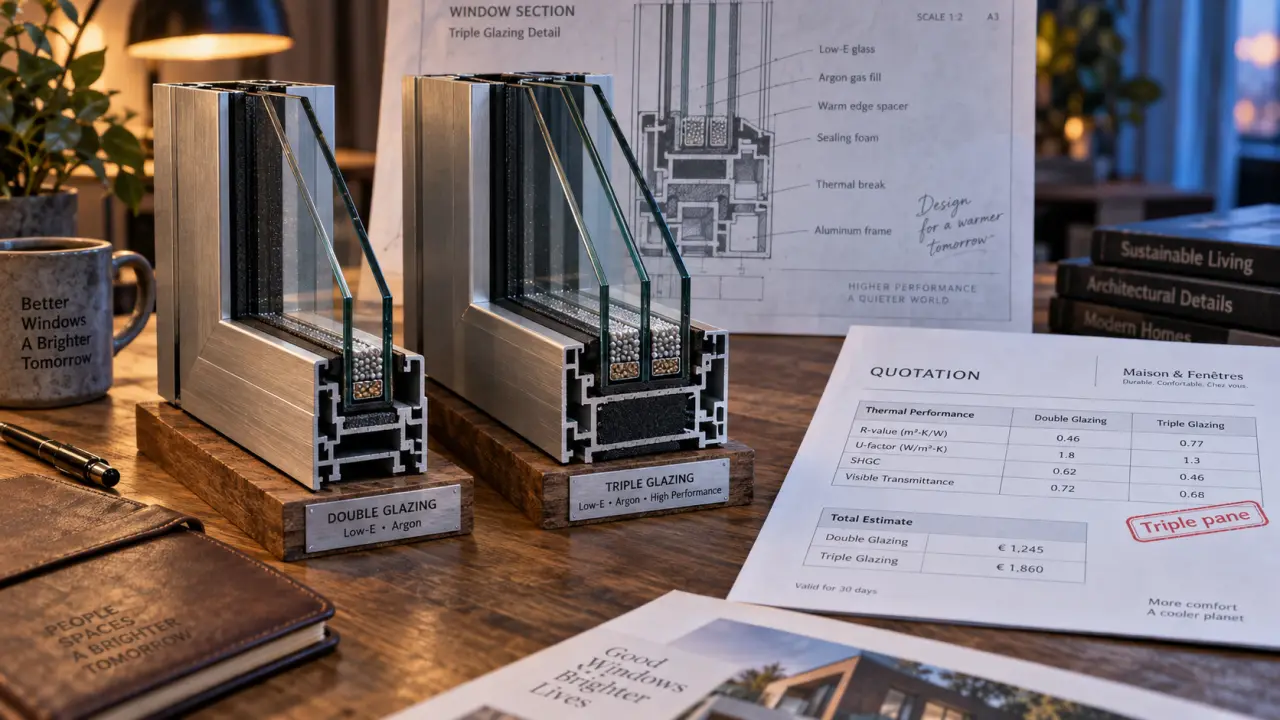
Triple pane windows add a third layer of glass and a second insulated space, usually filled with argon gas. Compared with double pane units, they can improve thermal comfort and sound control, but they also cost more and weigh more. The right choice depends on your climate, the rooms you use most, outside noise, and how long you plan to stay in the home.
What changes when a window gains a third pane?
Double pane windows have two glass layers separated by one insulating space. Triple pane windows have three layers and two spaces. That extra pane slows heat transfer, while the sealed airspaces and insulating gas make it harder for outdoor cold or heat to reach the room.
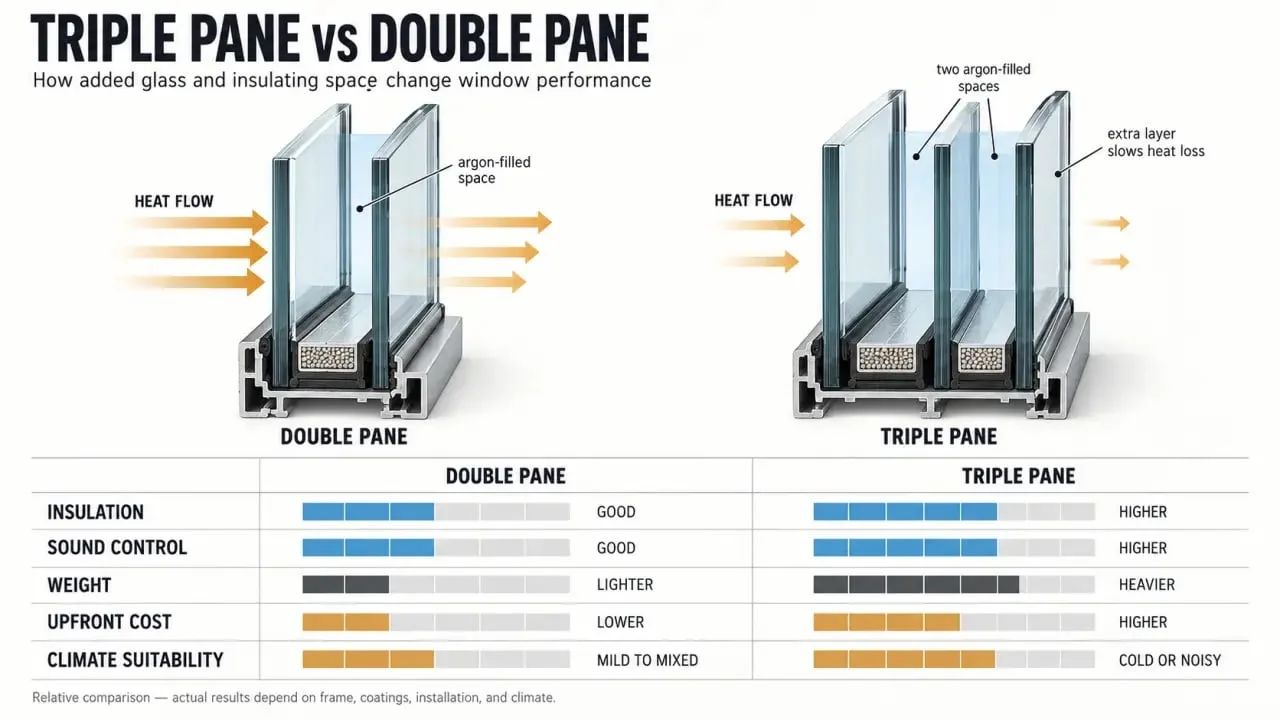
The difference is often described with R-value, which measures resistance to heat flow, and U-factor, which measures how readily heat passes through a window. Lower U-factors are better, while higher R-values are better. Typical double pane windows fall around R-3 to R-5. Triple pane models can reach approximately R-6 to R-9. Exact results still depend on the frame, spacers, coatings, glass thickness, and installation quality.
| Factor | Double pane | Triple pane |
|---|---|---|
| Glass construction | Two layers, one insulating space | Three layers, two insulating spaces |
| Thermal performance | Approximately R-3 to R-5 | Approximately R-6 to R-9 |
| Sound control | Good baseline performance | Potentially stronger, depending on the full unit |
| Weight and handling | Lighter | Heavier |
| Upfront cost | Usually lower | Often 10–15% more for comparable configurations |
Comfort is the benefit you notice before the energy bill
Energy savings matter, but the everyday improvement is often more immediate: a room that feels less chilly near the glass in winter, fewer noticeable drafts, and a more even temperature across the room. Triple pane windows can also reduce condensation risk because the interior glass surface tends to stay warmer in cold conditions. They do not eliminate condensation caused by high indoor humidity, but they make the window less likely to be the coldest surface in the room.
Use the window wall as a thermal lever
Think of glazing as a way to target the weakest parts of the home, not just as a replacement item. Improving every window to the highest specification may not be the smartest use of your budget. Upgrading the most exposed areas can have a bigger effect on comfort. A north-facing bedroom, a large living-room opening exposed to winter wind, or a home office above a garage may be a good place to specify triple pane. This room-by-room approach accounts for radiant chill, cold downdrafts along the glass, and how occupants actually use the space, rather than simply counting the windows on a quote.
Noise reduction needs more than an extra pane
A third pane can help soften outdoor noise, which is useful near highways, airports, or busy streets. Sound performance is not automatic, though. Different glass thicknesses can be more effective than three identical panes, and gaps around the frame can weaken an otherwise strong unit. If noise is a primary concern, ask for the window’s sound-control rating. Discuss laminated glass, frame design, weatherstripping, and installation details instead of choosing solely by pane count.
When triple pane windows earn their higher price
Triple pane windows are most compelling in cold climates, exposed locations, and homes where people expect to stay for many years. In these settings, stronger insulation can improve comfort through long heating seasons. The higher purchase price also has more time to be balanced against operating savings and day-to-day comfort.
- Choose triple pane first for cold northern climates, street-facing bedrooms, large glass areas, or rooms with persistent cold spots.
- Consider it carefully when replacing older single pane windows. The improvement in comfort can be significant, but the condition of the frames and the home’s air sealing still need attention.
- Choose double pane confidently in milder climates, on a tighter renovation budget, or when you expect to sell the home soon.
Double pane is not a poor compromise. A well-made, properly installed double pane window is a major improvement over single pane glass and can offer strong value. ENERGY STAR certified windows provide a useful starting point, but certification should support, not replace, a comparison of the exact U-factor, solar heat gain, frame, and warranty offered for your project.
Check the installation, not just the glass package
Triple pane units are heavier, and some product lines require slightly deeper frames. That does not make them difficult to install by default, but it does make careful measuring, secure fastening, and appropriate handling more important. Large operable sashes deserve particular attention because their weight affects hinges, balances, and how comfortably the window opens over time.
Before signing a proposal, compare equivalent scopes of work. Confirm whether each price includes removal, flashing, insulation around the opening, interior and exterior trim work, and disposal. Ask the installer to identify any water damage, rot, or out-of-square openings before ordering custom units. A premium glass package cannot compensate for a poorly prepared opening or air leaks around the frame.
A practical way to make the final decision
Start with the rooms that create complaints: cold seating areas, bedrooms disturbed by traffic, or spaces with winter condensation. Then compare double and triple pane quotes using the same frame material, opening size, coatings, and installation scope. Do not rely on the percentage price difference alone. A 10–15% increase may be sensible for a few high-impact windows and unnecessary for sheltered rooms that are rarely used.
If your priority is the lowest installed price, quality double pane windows are usually the rational choice. If you want steadier indoor comfort, better sound control, and long-term performance in a demanding location, triple pane windows deserve serious consideration. The best specification is the one that addresses the actual weak points of the house without paying for performance you will never feel.
{“@type”:”Article”,”@context”:”https://schema.org”,”headline”:”Triple Pane Windows: More Comfort and Less Noise, or an Upgrade You Do Not Need?”,”inLanguage”:”en-US”,”description”:”Triple pane windows add a third layer of glass and a second insulated space, usually filled with argon gas. Compared with double pane units, they can improve thermal comfort and…”}
Check the project conditions before choosing
Window and insulation advice depends heavily on the existing frame, local climate, orientation, moisture problems and how the room is used. Before buying materials, measure carefully, inspect for rot or air leaks, and compare the cost of a small repair with the cost of a full replacement. A cheaper fix can be smart, but only if it solves the real source of heat loss or discomfort.
For structural changes, large glass units, exterior work or anything affecting drainage and flashing, get a professional opinion before cutting or sealing. The best result usually comes from matching the product to the wall assembly, not from choosing the most expensive window accessory.
Related guides to continue
To build a stronger understanding of this topic, continue with these related guides from the same site. They cover nearby decisions, maintenance points and practical details that often influence the final result.
1 thought on “Triple Pane Windows: More Comfort and Less Noise, or an Upgrade You Do Not Need?”
Comments are closed.