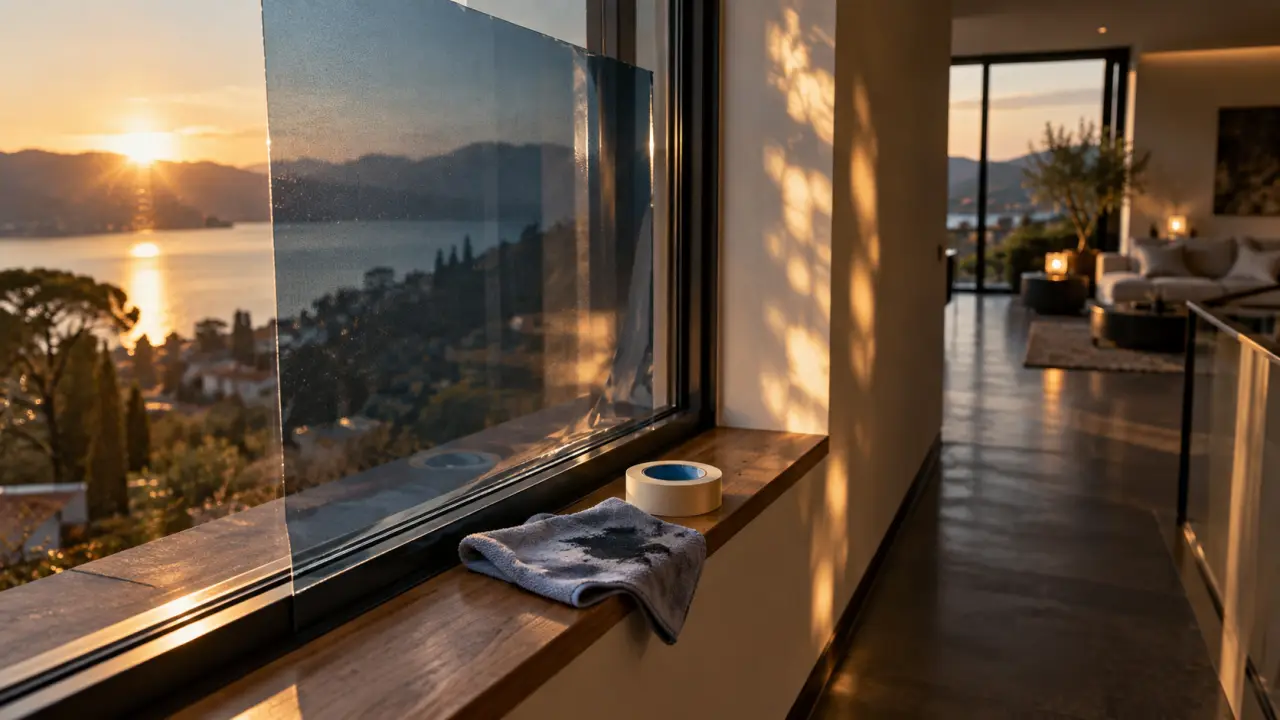
Windows can turn a comfortable room into an oven when direct sun heats the glass for hours. The cheapest way to block heat from windows depends on what you are willing to give up: daylight, the view, a little time, or the appearance of the window. Start with the sunniest room instead of treating every window at once.
First, stop the sun before it warms the glass
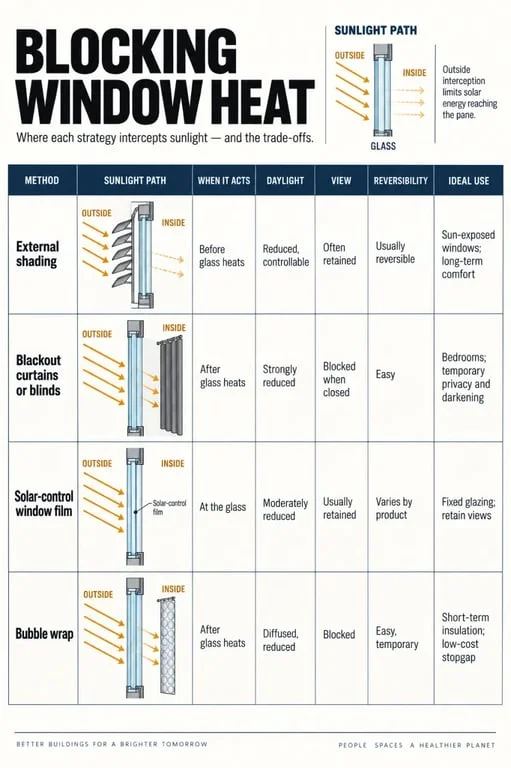
Solar heat gain begins when sunlight reaches the glazing and warms the window and nearby surfaces. An outside solution usually makes the most sense because it intercepts the sun before the glass absorbs and passes on that heat.
Use existing shade before buying anything
Close exterior shutters where available, and use an awning, pergola cover, deep eaves, or a temporary outdoor fabric screen on the sunny side of the home. A movable shade can be particularly useful for a conservatory, patio door, or large west-facing window, where late-afternoon sun is often the main problem. Check its fixing and wind exposure carefully. A loose sheet can become a hazard.
Look at the window elevation as a set of sun patches rather than one uniformly hot surface. The lower pane may receive direct afternoon rays while the upper pane is protected by an overhang. A nearby wall may also reflect glare onto one corner. Shading only the sections that receive direct sun can preserve more useful daylight than covering the entire window.
Choose the lowest-cost indoor fix for the room
Indoor treatments are easy to fit and often suitable for renters, but they act after sunlight has reached the glass. They can still improve comfort, especially when you close them before the room becomes hot. The right choice depends on whether you need darkness, daylight, privacy, or a temporary solution.
| Method | Cost level | Daylight | Best use |
|---|---|---|---|
| Bubble wrap | Very low | Strongly reduced | Temporary treatment for less visible windows |
| Blackout curtain or blind | Low to moderate | Blocked | Bedrooms and media rooms |
| Solar-control film | Low to moderate | Largely retained | Offices and living spaces |
| External shade | Varies | Retained indoors | Windows exposed to direct sun |
Blackout curtains and blinds: useful, but limited
Blackout curtains and blinds reliably stop light, which helps in bedrooms where heat and early sun disturb sleep. They also reduce glare and limit some solar heat entering the room. However, darkness is not the same as thermal performance. The glass can still become hot behind the covering.
For a better result, fit the covering close to the glass and cover as much of the window perimeter as possible. Light-coloured or reflective surfaces facing the window can reflect solar rays. Cellular or honeycomb shades add another benefit by trapping air within their structure. Side tracks can position the shade closer to the glass and reduce gaps around the edges.
Blackout options work best when the room benefits from darkness, such as a bedroom or media room. They are less suitable when you want a clear view or steady natural light during the day. If you only need protection during peak sun, a movable blind or curtain lets you open the window again when the exposure drops.
Use bubble wrap only as a short-term insulation layer
Bubble wrap is arguably the cheapest DIY option because its pockets create a layer of trapped, still air against the glass. It is most sensible for a utility room, a rarely used window, or a temporary situation where appearance does not matter. It reduces the view and softens daylight, so it is a poor choice for a main living-room window.
Apply it tightly and remove it when it no longer suits
Cut the wrap slightly larger than the pane, press it firmly against clean glass, and seal the edges so the air layer remains in place. It should sit against the glass rather than hang loosely in the frame. Check it regularly for moisture or grime, particularly in rooms with high humidity.
Because bubble wrap is reversible, it can suit renters or anyone testing a low-cost fix before buying a more permanent covering. Avoid damaging painted frames, seals, or landlord-owned fittings. Removing it when the hot season ends also restores the view and daylight, although the material may need replacing if it becomes dirty or damaged.
Keep the light with solar-control window film
Heat-rejection window film is the better low-cost route when you want daylight and a clear working space. Depending on the product, it reflects and absorbs some solar rays before they pass through the glazing. Some films also reduce glare, add daytime privacy, and can block up to 99% of harmful UV rays, helping protect fabrics, flooring, artwork, and furniture from fading.
Film is not automatically the right choice for every pane. Tinted or reflective finishes can alter the exterior appearance and the quality of daylight indoors. A film may preserve more natural light than a blackout covering, but it does not provide the same level of darkness or privacy at night.
Measure each pane carefully, clean the glass thoroughly, and follow the manufacturer’s instructions for the type of glazing. If you already have tinted, coated, or double-glazed units, confirm compatibility before applying anything. A poor fit, trapped dirt, or visible air bubbles can make the window look untidy and reduce the benefit of an otherwise suitable product.
Know when a cheap fix has reached its limit
Combining curtains, film, and temporary insulation can improve comfort, but it can also create visual clutter, cost more than expected, and make windows awkward to use. Treat the main source of overheating first, usually the room with the largest glass area or the strongest direct sun. This room-by-room approach keeps the initial cost under control.
External shade is generally the first option to consider when direct sunlight is the main cause of overheating. Bubble wrap suits a hidden window and a temporary budget. Blackout curtains or blinds make more sense where darkness matters. Solar-control film is worth considering when you want to retain daylight while reducing glare and some solar heat.
If a single-glazed window is also draughty, noisy, cold in winter, or prone to moisture build-up, seasonal fixes may be masking a broader problem. Retrofit double glazing can replace the single-glazed component while retaining the existing frame in suitable cases. It costs more, but it addresses year-round comfort rather than only the hottest few weeks.
{“@type”:”Article”,”@context”:”https://schema.org”,”headline”:”4 Cheap Ways to Block Heat from Windows Without Losing All Your Daylight”,”inLanguage”:”en-US”,”description”:”Windows can turn a comfortable room into an oven when direct sun heats the glass for hours. The cheapest way to block heat from windows depends on what you are willing to give up:…”}
Related guides to continue
To build a stronger understanding of this topic, continue with these related guides from the same site. They cover nearby decisions, maintenance points and practical details that often influence the final result.