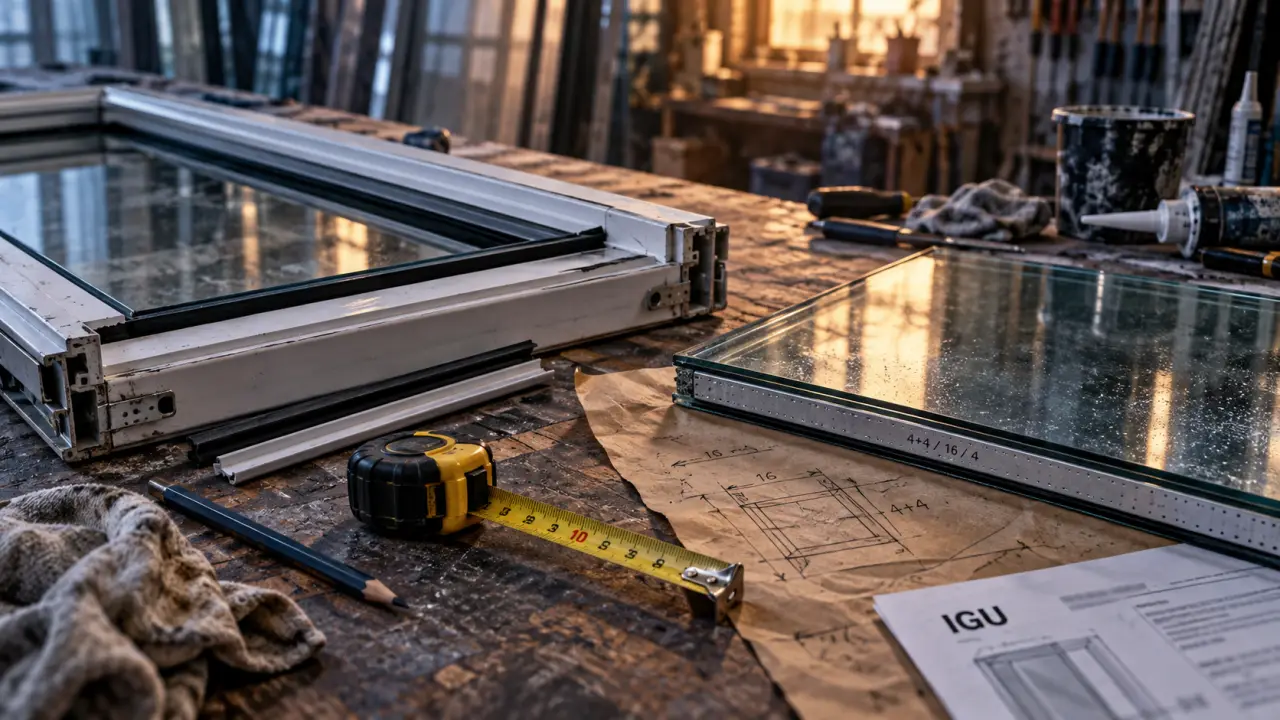
A cracked pane, condensation between the panes, or a cold spot near the glass does not automatically mean replacing the entire window. In many cases, double-pane window replacement means changing the sealed insulated glass unit (IGU) while keeping the existing sash and frame. The first decisions are straightforward: identify what failed, measure the IGU accurately, and compare the price of glass-only replacement with a full window.
Start with the right replacement scope
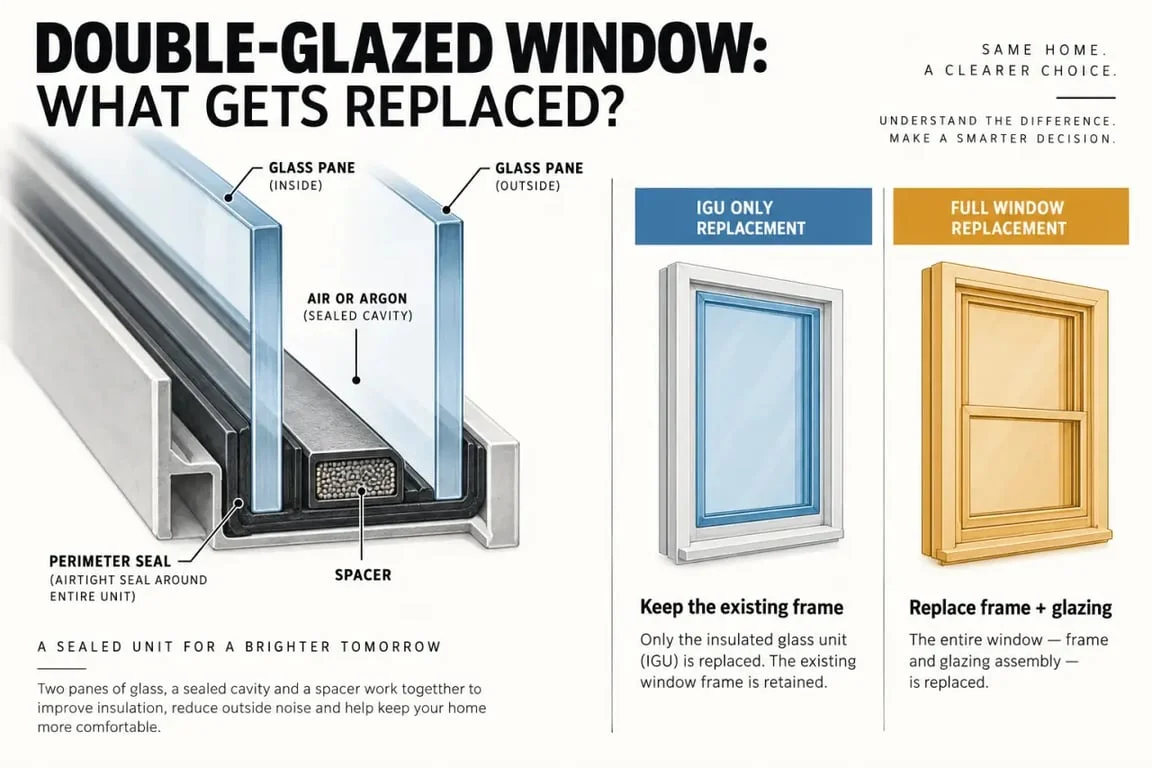
A double-pane window has two sheets of glass separated by a sealed spacer. The space between them may contain air or argon gas, which slows heat transfer. When the seal fails, moisture can collect between the panes. When one pane breaks, the sealed IGU is usually the durable replacement part.
| Condition | Most sensible option | What to check first |
|---|---|---|
| Broken glass, sash and frame in good shape | Replace the IGU only | Glazing beads, sash condition, exact glass size |
| Fogging between panes | Replace the IGU only | Whether the frame drains properly and remains square |
| Rot, warped frame, recurring leaks, difficult operation | Consider full window replacement | Frame integrity, weatherstripping, installation defects |
| Only the exterior sheet is shattered | Secure the opening, then assess the IGU | Loose shards and whether the sealed unit has been compromised |
If only the outer pane is damaged, carefully removing loose exterior shards may avoid an immediate board-up in some situations. This is not a permanent energy-efficient repair. Once the sealed assembly is breached, replacement glass is usually the proper finish. Wear suitable hand and eye protection, and call a professional when the glass is unstable or the opening is above ground level.
Measure the IGU before you order custom glass
The costliest mistake is ordering from the visible glass alone. An IGU is a custom-sized component, and a difference of a few millimeters can decide whether it sits flat, puts stress on the edge seal, or cannot be installed. If the sash is removable, take it to a glass shop when practical. The supplier can then inspect the profile and glazing system more accurately.
Record three dimensions, not just width and height
Measure the existing IGU’s width, height, and overall thickness. Take the width and height from the unit itself after removing the glazing beads, rather than from the frame opening. Also record the spacer color, tempered-glass markings, decorative grids, low-emissivity coating, and whether the original unit used argon gas. Photograph the label or etching in a corner before disposing of the old unit.
- Measure in more than one place in case the sash is out of square.
- Write dimensions as width by height, and state the unit thickness separately.
- Identify which face has a coating if the supplier asks for that information.
- Keep the glazing beads in order. The top, bottom, and sides may not be interchangeable.
Use your phone as a simple inspection record before ordering. Photograph the sash straight on with a tape measure across it, then zoom in on the spacer and corner markings. This record can reveal a reversed number, confirm the grid layout, and give the glass shop something useful to review if the written measurements seem unusual. It takes little time and can prevent a custom panel from becoming expensive scrap.
What the replacement work involves
Replacing only the glass is possible for a careful DIYer when the sash design is straightforward, but the work allows little room for error. A hard-to-remove sash, brittle vinyl, damaged wood stops, or large tempered panels are good reasons to hire a glazier. The condition of the sash matters as much as the new glass.
A typical IGU replacement sequence
- Remove the sash if the window design allows it, then place it on a padded, stable surface.
- Lift the glazing bead gently with a smoothed-edge stiff putty knife or plastic pry tool. Avoid gouging the frame.
- Cut the old tape or silicone around all four sides with a utility knife. An oscillating tool with a scraper attachment can help, but it can also damage the sash quickly.
- Remove the old unit, clean the mounting surface, and clear away loose debris.
- Apply a thin, continuous bead of clear silicone where the manufacturer’s glazing system requires it.
- Set the new glass squarely in place, then reinstall the glazing beads without forcing them.
Do not use excess silicone to compensate for a poor fit. It can block drainage paths and make future service harder. After installation, check that the sash closes, locks, and drains as it did before. A replacement that looks neat but prevents proper operation is not a successful repair.
Budget for glass, labor, and the details that change the quote
The cost to replace one double-pane window has a national average of about $450, with a typical range of $250 to $800. A small, plain unit may cost closer to $150, while specialized full-window projects can reach $7,500. These figures describe different scopes of work. Replacing an IGU in one sash is very different from replacing a large custom window, including frame work.
Size, glass thickness, tempering, grids between the glass, coatings, argon fill, access, and the condition of the sash all affect the final price. One service model charges $250 for the visit and labor, plus twice the cost of the glass. That makes it worth asking how the contractor separates glass, travel, disposal, and installation on the estimate. A clear breakdown makes quotes easier to compare.
Choose efficiency upgrades that solve a real comfort problem
Double-pane glazing helps reduce heat loss in winter and heat gain in summer because the sealed space interrupts direct heat transfer. The practical benefit is often comfort first: less cold radiation beside the window, fewer hot zones in sunny rooms, and a more even indoor temperature. Lower heating and cooling demand may follow, but the result depends on the rest of the home’s insulation, air leakage, shading, and HVAC use.
When ordering replacement glass, match the performance to the room instead of paying for every available option. A sunny west-facing room may benefit from a suitable low-emissivity coating, while a quiet bedroom near traffic may justify laminated glass for added sound control. If the frame is failing, premium glass alone will not fix drafts or water intrusion. In that situation, direct the budget toward a full window replacement.
{“@type”:”Article”,”@context”:”https://schema.org”,”headline”:”Double-Pane Window Replacement: Measure the IGU Correctly or Risk Costly Custom Glass”,”inLanguage”:”en-US”,”description”:”A cracked pane, condensation between the panes, or a cold spot near the glass does not automatically mean replacing the entire window. In many cases, double-pane window…”}
Related guides to continue
To build a stronger understanding of this topic, continue with these related guides from the same site. They cover nearby decisions, maintenance points and practical details that often influence the final result.