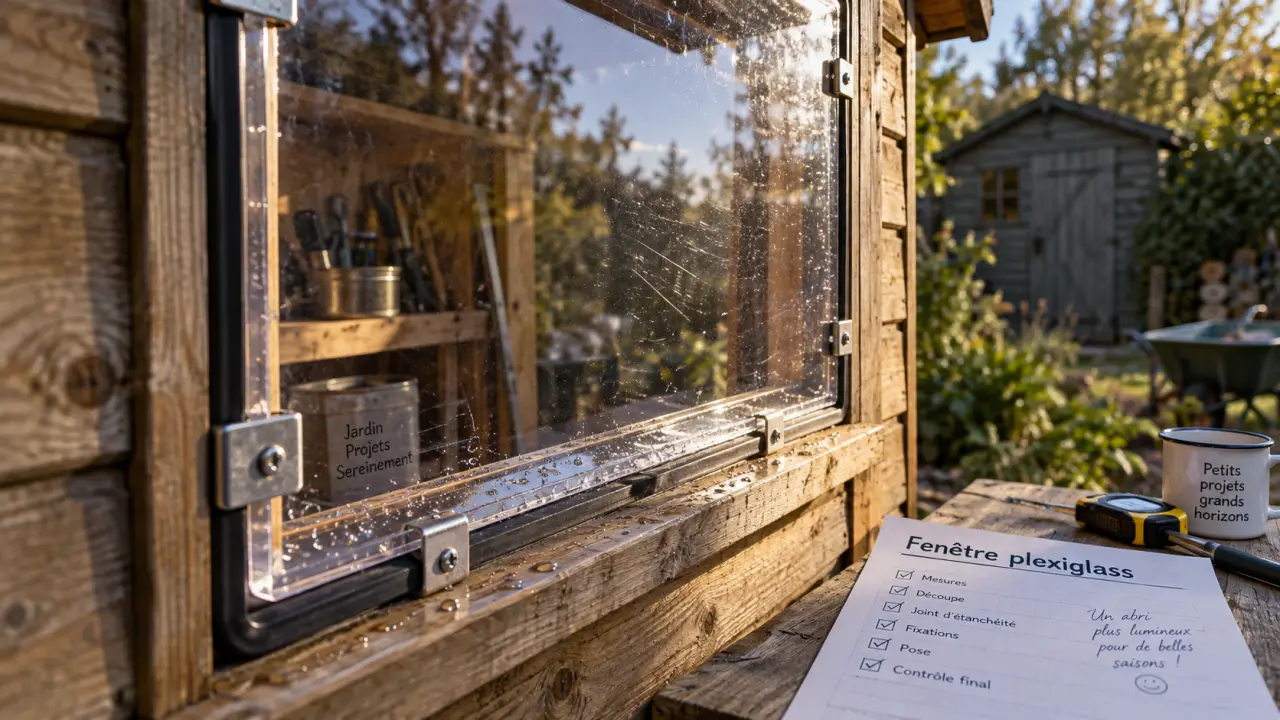
Plexiglass windows are acrylic panels used in place of glass when low weight, impact resistance, or quick replacement matters most. They can work well in a shed, cabin, hunting blind, storm-damaged opening, or secondary panel. The result depends on the match between the panel, the frame, and the expected lifespan. A tough sheet that is cut or mounted poorly can still rattle, bow, admit water, and disappoint.
What Plexiglass Windows Do Better Than Glass
Plexiglass, often called acrylic, is a transparent plastic sheet made into window panels. Its appeal is practical: it is lighter to handle than glass and is far less likely to break into dangerous shards after an impact. That makes acrylic windows useful in exposed or occasionally occupied spaces, as well as in structures where safe handling matters.
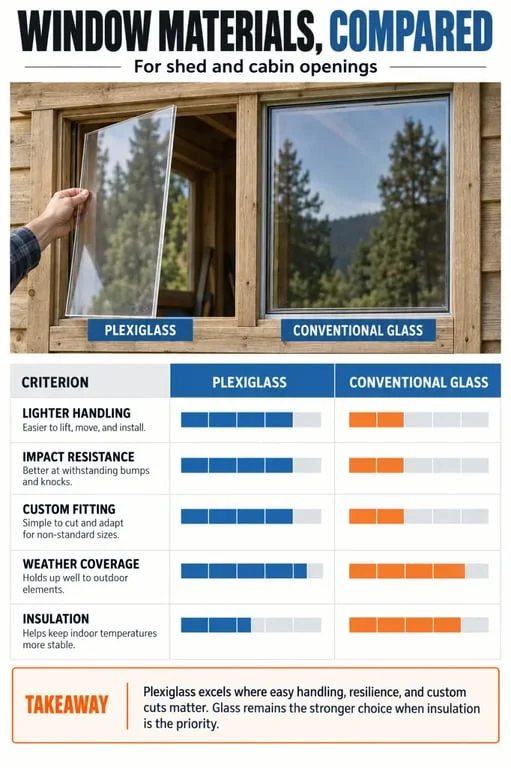
| Factor | Plexiglass window panel | Glass window pane |
|---|---|---|
| Impact response | More resistant to shattering | Can crack or shatter on impact |
| Handling | Lighter and easier to move into place | Heavier and more fragile during fitting |
| Custom replacement | Can be cut or ordered to a custom size | Usually requires glazing-specific sizing and handling |
| Long-term clarity | Depends heavily on UV exposure and surface care | Generally less prone to yellowing |
| Insulation | Limited when used as a single sheet | Depends on the complete glazing system |
“Better than glass” depends on the job. For a lightweight, shatter-resistant cover over an opening, plexiglass windows can be the more practical purchase. For a main house window expected to provide lasting weather sealing, thermal comfort, and clear views for many years, a purpose-built insulated window system is usually the stronger choice.
Choose the Panel Around the Opening, Not the Other Way Around
Measure the usable frame carefully
Do not order from the outside dimensions of an old pane alone. Measure the opening at several points because timber frames, blind walls, and older cabins are rarely perfectly square. Record the narrowest width and height, the available depth, and the position of any latch, hinge, clip, or overlap. Custom sizing is useful because it avoids forcing a nominally standard panel into an irregular opening.
The overlooked detail is the edge network around the panel. A window depends on several contact points: the frame, gasket or sealant, fasteners, drainage path, and space for panel expansion. If one edge is squeezed rigidly while another is left unsupported, wind load concentrates at the weakest point. A slightly smaller panel with even perimeter support and an appropriate seal often performs better than a tight-fitting sheet with nowhere to move.
Thickness and orientation affect rigidity
A 1/8 inch panel may suit a small, protected opening or a light-duty blind window, but it is not a universal solution. As an opening becomes wider or more exposed to wind, a thin sheet can flex noticeably. That movement stresses clips and sealant, creates noise, and may eventually encourage cracking around drilled holes. Ask the supplier which thickness suits your opening size, support spacing, and weather exposure.
Choose the orientation before ordering. Horizontal and vertical plexiglass windows are available for some blind models, and the direction determines where hinges, catches, and viewing lines fall. A panel may be clear, tinted, or blackout. Clear maximizes light and visibility, tint reduces glare, while blackout is intended for privacy or light control rather than an outside view.
Match the Installation to the Real Use Case
Plexiglass windows make sense where replacement speed and resilience matter more than premium window performance. A temporary enclosure after damaged glazing, a utility shed, an off-grid cabin, or a hunting blind are all plausible uses. In these settings, the ability to replace a panel without handling broken glass is a genuine advantage.
- Temporary weather cover: useful for closing an opening while a permanent repair is arranged, provided the edges are sealed against rain.
- Blinds and small outdoor structures: select the panel count, orientation, and compatibility for the exact blind model. Hinges and window clips may be sold separately.
- Interior safety panels: practical where breakage is a concern, provided scratch resistance and fire requirements have been checked for the location.
- Main living-space windows: consider complete glazed units instead when heating costs, condensation control, security, and long-term weatherproofing are priorities.
Before buying, check whether the product is sold individually or as part of a set. A replacement project can stall over a missing clip or incompatible hinge, not because the acrylic panel itself is wrong. Treat the accessories as part of the window assembly, rather than as an afterthought.
Plan for Sun, Scratches, and Seasonal Movement
Acrylic is not maintenance-free. Over time, strong UV exposure can contribute to yellowing or hazing, and abrasive cleaning can dull the surface. Use a soft cloth, plenty of water, and a cleaner suitable for acrylic. Dry-wiping dust across the panel is an easy way to create fine scratches. Avoid harsh solvents unless the panel manufacturer explicitly approves them.
Do Not Confuse Weather Resistance With Insulation
A well-fitted plexiglass panel can keep out wind and rain, which is already far better than leaving an opening uncovered. A single acrylic sheet, however, has limited insulating value compared with an insulated window assembly. In a heated room, the weak point may be the complete setup: panel thickness, air leakage at the perimeter, and condensation on a cold surface. This trade-off deserves attention, especially for a long-term installation.
Leave Room for Inspection and Replacement
Check outdoor panels after storms and at the start of each season. Look for clouding, new cracks near fasteners, loose clips, failed sealant, or water marks around the frame. A panel that is inexpensive and easy to replace can be an excellent short-term solution. It becomes a poor bargain when it is expected to solve structural, insulation, or frame-repair problems it was never designed to address.
{“@type”:”Article”,”@context”:”https://schema.org”,”headline”:”What Plexiglass Windows Do Better Than Glass”,”inLanguage”:”en-US”,”description”:”Plexiglass windows are acrylic panels used in place of glass when low weight, impact resistance, or quick replacement matters most. They can work well in a shed, cabin, hunting…”}
Check the project conditions before choosing
Window and insulation advice depends heavily on the existing frame, local climate, orientation, moisture problems and how the room is used. Before buying materials, measure carefully, inspect for rot or air leaks, and compare the cost of a small repair with the cost of a full replacement. A cheaper fix can be smart, but only if it solves the real source of heat loss or discomfort.
For structural changes, large glass units, exterior work or anything affecting drainage and flashing, get a professional opinion before cutting or sealing. The best result usually comes from matching the product to the wall assembly, not from choosing the most expensive window accessory.
Related guides to continue
To build a stronger understanding of this topic, continue with these related guides from the same site. They cover nearby decisions, maintenance points and practical details that often influence the final result.