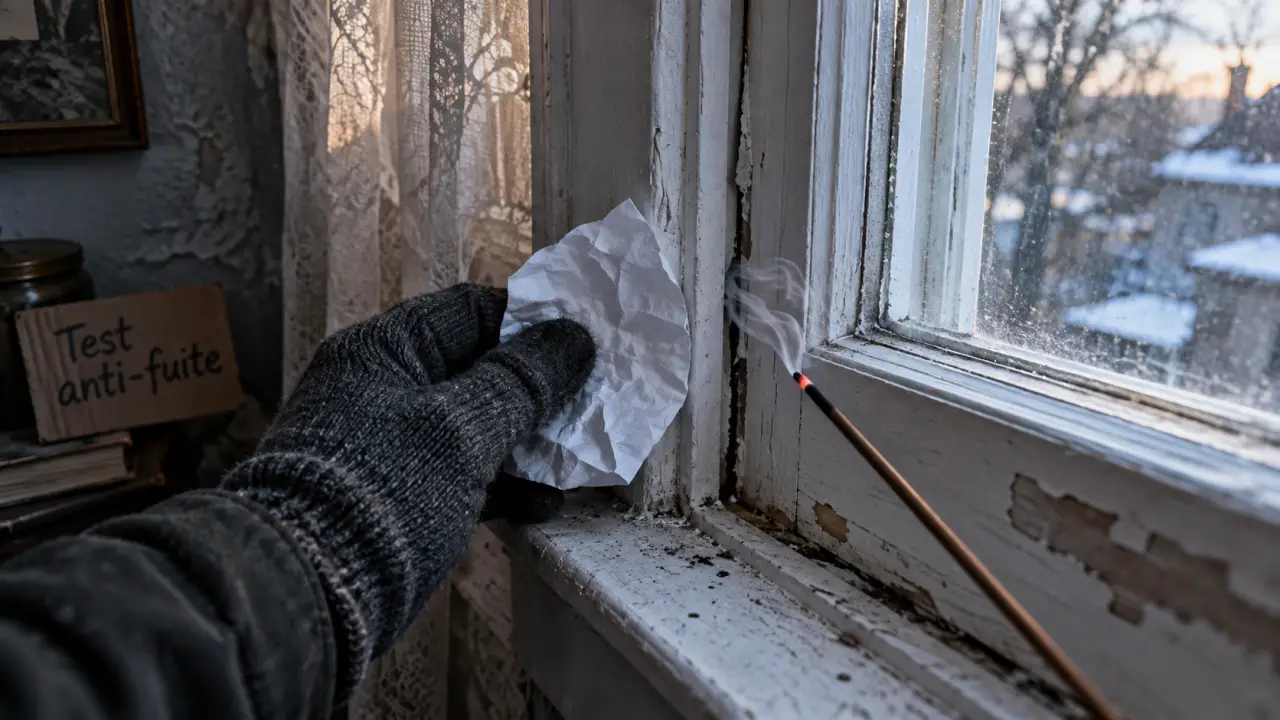
Cold air around a window is rarely solved by turning up the heat. Start by finding the exact leak, then choose a material that fits that part of the window. Caulk, weatherstripping and shrink film each solve a different problem. Using the wrong one can jam the sash or let the draft return within weeks.
Start by finding where the draft enters
Check your windows before the first sustained cold spell, ideally on a windy day. Move your hand slowly around the sash, frame, trim and lower rail. Rattling glass, moving curtains, outside odors, dust, pests, peeling paint or a noticeably colder strip of wall can all point to an air leak.
Use the paper and incense tests
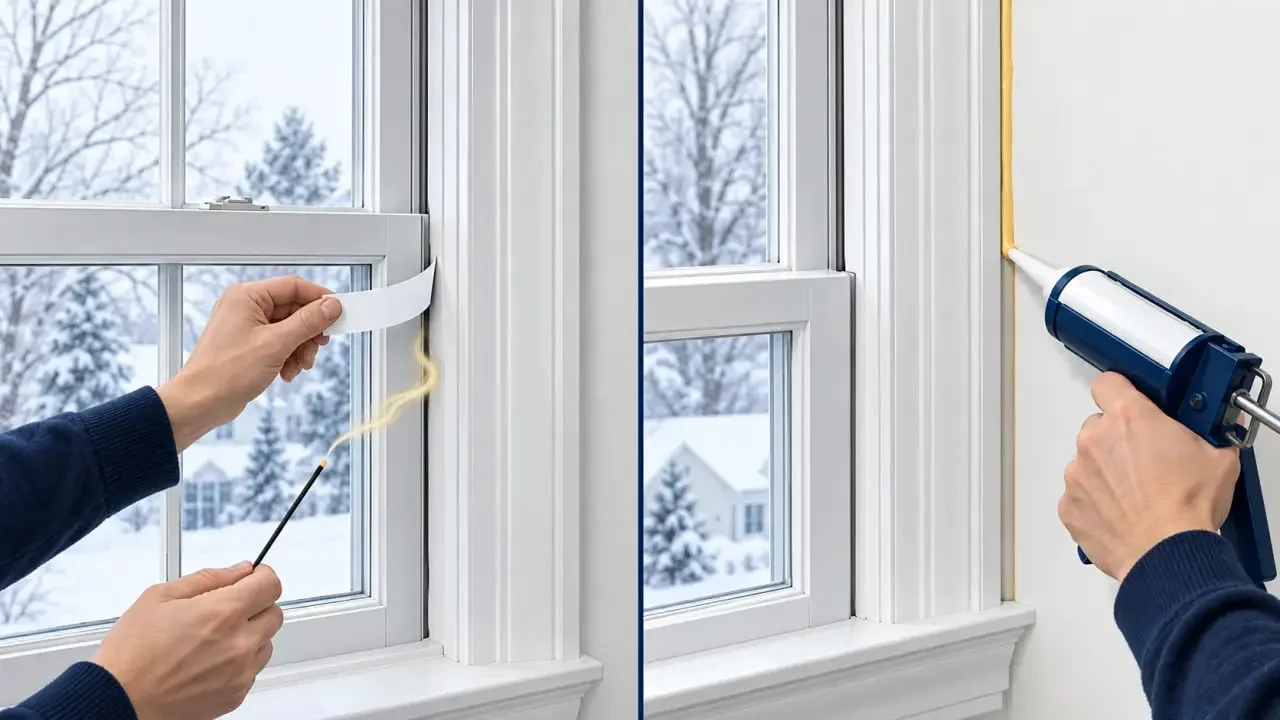
Close and lock the window over a strip of paper. If the paper slides out with little resistance, the sash is not sealing tightly at that point. For harder-to-find leaks, hold a lit incense stick near the seams and watch the smoke. Smoke that pulls sideways or flutters reveals moving air. Keep the flame away from curtains, blinds and plastic film.
One area is easy to overlook: the joint where the window trim meets the wall. The sash may appear tight while air still enters through this transition in the building envelope. Look for hairline cracks in the paint or a gap along the trim edge. Sealing this stationary perimeter can stop a draft that sash weatherstripping will never reach, without affecting the window mechanism.
Match the sealing material to the gap
The basic rule is straightforward: use caulk on parts that do not move, and weatherstripping where two surfaces repeatedly open, close or slide. Add temporary layers when the glass feels cold or when you need a rental-friendly option.
| Method | Best location | Can the window still open? | Best use |
|---|---|---|---|
| Caulk | Fixed cracks around the frame, trim or wall | Yes, if kept off moving joints | Longer-lasting air sealing |
| Weatherstripping | Meeting rails, side channels and operable sashes | Yes | Windows used during winter |
| Plastic shrink film | Interior frame, over the whole opening | No, until removed | Temporary protection for rarely opened windows |
| Draft stopper | Bottom rail or sill | Usually | Quick help with a low-level gap |
| Thermal curtains | Inside the room | Yes | Extra comfort, not leak repair |
Caulk fixed gaps, never the operating seam
Choose caulk for cracks between the frame and trim, or between the trim and the surrounding wall. Remove loose old material where possible, then clean and dry the surface. Apply a continuous, modest bead with a caulk gun and smooth it neatly.
Do not caulk around the sash where it meets the frame. That is an operating joint. Sealing it permanently can jam the window or damage the finish when you force it open.
Weatherstrip windows that must remain usable
Foam, rubber or felt strips can close small gaps around a movable sash. Measure each run first, cut the material cleanly and install it where it compresses gently when the window closes. A strip that is too thick can make locking difficult; one that is too thin may do little. Test the lock and opening action immediately, rather than discovering the problem during an emergency.
Apply temporary winter layers properly
Temporary measures work well for older, rattling windows and for renters who cannot alter the frames. They are most useful after obvious air leaks have been addressed.
Install plastic shrink film on a clean interior frame
Plastic window film creates a still-air layer on the room side of the glass. Apply the supplied double-sided tape to a clean, dry interior frame. Press the film into place with a little extra material at the edges, then use a hair dryer to tighten it. Work gradually from the center outward.
Wrinkles are mainly cosmetic. Loose edges are the real problem because they allow air to circulate behind the film. Use the film only on windows you do not need to open until spring. It is transparent and inexpensive, but it cannot repair a damaged frame, failed sash hardware or cracked glazing.
For a lower-commitment fix at the sill, use a fitted draft stopper or tightly rolled fabric. Make sure it does not interfere with drainage or window operation.
Use curtains and storm treatments as a second line of defense
Heavy or thermal curtains can make a room feel more comfortable by reducing the radiant chill from cold glass. Close them after dusk and open them in daylight when useful solar warmth is available. They do not replace air sealing: a curtain may hide a draft while cold air continues to enter behind it.
Storm treatments add another protective layer and may suit older windows with sound frames but limited insulation. The decision depends on the window’s condition and your budget. If the frame is soft, warped or visibly damaged, or if it still leaks after careful sealing, repeatedly buying temporary products may not be the sensible long-term option.
Check the results and know when DIY is not enough
After sealing, repeat the paper and incense tests and listen for rattling during windy weather. The U.S. Department of Energy states that up to 30% of home heat can escape through windows. Even a modest reduction in drafts can improve comfort and help control heating use.
Actual savings vary with the home, climate, heating system and size of the leaks. Sealing is useful, but it does not guarantee a specific reduction in your energy bill.
Inspect caulk and weatherstripping every season. Caulk can dry out or shrink, while compressible strips can flatten, detach or collect dirt. If a draft seems to come from inside the wall, persists around several windows, or appears with moisture staining and condensation, arrange a home energy assessment. A professional can distinguish window leakage from broader insulation, ventilation or wall-cavity issues.
Before paying for larger work, contact your local utility company about rebates or weatherization assistance. The DSIRE database can help identify location-specific incentives. The Weatherization Assistance Program may also be relevant for eligible households.
{“@type”:”Article”,”@context”:”https://schema.org”,”headline”:”Seal Windows for Winter Without Losing the Ability to Open Them”,”inLanguage”:”en-US”,”description”:”Cold air around a window is rarely solved by turning up the heat. Start by finding the exact leak, then choose a material that fits that part of the window. Caulk,…”}
Related guides to continue
To build a stronger understanding of this topic, continue with these related guides from the same site. They cover nearby decisions, maintenance points and practical details that often influence the final result.